Wednesday, April 30, 2014

Microbes Mop up Gas Leaks?

Microbes are incredible little beings, they can do just about anything you can name. They help aid your body's functions, help make food we need to survive, and even help us when we are sick. Just recently, we've found that not only do they help us with all of that, but they help us clean things up. Oil spills and gas leaks happen in today's world, it's a sad but true fact. However, there is a strain of bacteria called Methylocella silvestris that can help us do just that. This bacteria is found in the wild soils of Northern Europe, it thrives in peat, tundra and forest type soils. This particular little bacteria can grow on methane and propane found in these gasses, from them on the microbe can consume it and turn it into energy. This bacteria can possibly help stop global warming and the release of greenhouse gasses in the atmosphere. Natural gas is good for the environment, but to an extent. "Molecule-for-molecule, the effect of methane on global warming is more than 20 times greater than carbon dioxide over a 100 year timeframe. It is therefore very important that we understand how it can be removed biologically in the environment before it is released into the atmosphere." Says Dr. Colin Murrell. Only time will tell what this little guy can do for us and the environment, hopefully good can come from eating away these gasses. 

The article has a lot of information that was useful for this topic, it really covered everything that I needed to know to write this blog post. It gave unbiased information throughout and was really helpful and interesting to read. 

http://ktbs.images.worldnow.com/images/23748346_SA.jpg

Wednesday, April 23, 2014

Microbes on your Money?

I know you have all heard of the stories of traces of cocaine on 99% of money being circulated in the US everyday. I know you have also heard the stories of germs on money and how you should always wash your hands after touching it. However, new findings show that all these tales can be more than true, and there is a lot more about whats hiding on our money than we thought we previously knew. Each dollar, five dollar, ten dollar etc bill we touch has over 3,000 different microbes living on it. Most of these little guys are harmless in nature though, they just simply stick to the bill when touched. Your money could even contain traces of anthrax or diphtheria. There are also predictions that this is how antibiotic resistant microbes get transferred from person to person. It's all on the cash we have to touch to get food, clothes and other necessary items for our daily life. Scientists tested 80 dollar bills floating around Manhattan and found that the most commonly circulated microbe is the one that causes acne. Runners up are microbes that live in the mouth and vagina. Their advice is to simply wash your hands after touching your money to help stop the spread of disease and possibly end some major outbreaks that have been happening in the US.

This article was very informational and really helped shed light on what exactly lives on the money we touch, it was enlightening but kinda scary at the same same time.

http://www.micro-blog.info/wp-content/uploads/2013/12/dirty-money.jpg
 

Thursday, April 17, 2014

Chinese Herbal Medication used Against Hepatitis-C?

There are anomalies everywhere that are unexplained, sometimes even something being made to treat one thing being more effectively used against something else. These kinds of anomalies really help to further scientific researches and bring about good news to those who are in need of hearing it. This particular news will benefit anyone who suffers from Hepatitis-C. There a new finding in old Chinese herbal medicines used to commonly treat sore throats and other various inflammations. However, people are now finding that one of the herbs taken from certain parts of Taiwan and Southern parts of China is helping to cure the people affected by Hepatitis-C who originally took the medication hoping to get rid of throat pains and inflammation.  This medication can even help to cure the disease that can destroy the liver and cause certain cancers to start developing in the people effected by Hep-c. Its a breakthrough in the scientific community to help further this research in helping to stop this disease from further spreading to more individuals. It was a blessing in disguise of a common remedy for the sore throat, an helpful anomaly. The author really helped to bring out all the details with scientific facts (some of which I couldn't understand - but seems legit!) 
http://static.ddmcdn.com/gif/traditional-chinese-herbal-medicine-1.jpg

Wednesday, April 9, 2014

Battling Infections With Microbes?

There are many kinds of bacteria in the human body; some make us sick and others do the best they can in assisting our overall health. Scientists are doing more studies on the beneficial gut microbes that can "team up" with blood blood cell development to become a disease fighting super machine. Some diseases that the gut microbes are said to help keep away were tested in mice and are thought to be inflammatory bowel disease, autism and multiple scoliosis. These bacteria are also thought to prep our bloodstream and blood cells to fight off nasty sickness and diseases mentioned above. These benevolent bacteria are also supposed to help increase white blood cell count. Those test mice without these gut microbes had way less of a defense force than mice with the microbes inside of them. These gut microbes helped to mature other cells as well as those within our blood. These little gut microbes are tiny but mighty in what they do. I would definitely like to know what other adverse effects could happen if you're born without the necessary gut microbes to help keep you healthy. Scientists are helping to bring out some of the best bacteria within us to show how helpful they can be to human's health.

This author really gave a ton of information and brought up the multiple mice researches that helped to further this experiment and bring out more positive information about these bacteria that live in our gut.
picture: http://www.scilogs.com/mmmbitesizescience/files/intestinal-bacteria-670.jpg

Wednesday, April 2, 2014

Microbes Caused Mass Extinction?

252 million years ago the world suddenly became desolate of lifeforms that had been there thousands of years ago. Wiped out after all this time and we have only thought that methane from large volcanoes was to blame, however, new research shows that maybe it wasn't just the gas but also a microbe that helped the gas become so prevalent in the air that it caused mass extinction. All those years ago about 90% of the earth's population was wiped clean due to toxic amounts of methane in the air. Scientists always thought the cause for such a catastrophic event was volcanoes emitting the gas. However, these new studies show that a bacteria named Methanosarcina is partially to blame. This bacteria munches away at carbon and in turn produces large amounts of methane. Which can be converted into CO2 by other microbes, this is the cause of the lack of oxygen in the air what caused these species of creatures to just start dropping like prehistoric flies. This microbe obtained the ability to convert CO2 into methane at around 250 million years ago, about the time the species were dropping dead. It's amazing how microbes can react and change the world around us by acquiring one simple new trait, it's scary at the same time.

The author was very good about sticking to the facts; and giving quite a lot of them. This article was fantastic to write a lot about because of all the information found within it.


http://www.windows2universe.org/earth/images/KTextinction_big.jpg

Wednesday, March 26, 2014

Microbes and Dark Chocolate, Can it Effect Your Health?

We've always been told that chocolate doesn't benefit ones health at all and that its actually very detrimental to it. New research being done on dark chocolate is showing that hungry microbes feast on dark chocolate and it helps your heart stay healthy. However, there are two kinds of microbes that eat up dark chocolate; some good and some not so good. Bifidobacterium is an example of a good one, it eats up the chocolate and it produces anti-inflammatory compounds which help the cardiovascular tissue are reduce the risk of having a stroke. The bad ones that eat chocolate like E. coli and Clostridia can cause non desirable effects like bloating, diarrhea, and gas. They tested three different cocoa powders and they found that this powder has antioxidants stored inside of it. Also, if you digest cocoa with prebiotics in it (prebiotics are good arbs found in things like raw garlic that we can't digest alone, but are good for us to eat) it significantly improves one's overall health by adding a greater number of beneficial microbes into your gut. If you consume cocoa with fiber in it, more anti-inflammatory agents will be produced as well.  You can further your overall health by eating fruits like acai and pomegranates with the chocolate. It just goes to show that your favorite sweet treat can also benefit your health, which is good to know because who would ever stop eating chocolate? This just gives us a better reason to!

http://cdn.static.ovimg.com/episode/925571.jpg

Wednesday, March 12, 2014

Cosmetic Treatments and Bacteria?

   3-12-14

They say that sometimes beauty comes with a price. What of this price consisted of getting an expensive treatment and obtaining a bacterial infection from it? This is what is happening to patients of cosmetic treatments around the world. When a person is trying to get perfectly plump lips or something to smooth out their wrinkles, they are getting a jelly like substance pumped under their skin. (That in itself does not sound all too healthy for you) people obtain infections from these procedures that leave them with tender bumps or even skin lesions on the face. This was supposedly caused by an allergic reaction to the jelly that is injected into the skin. However, new research proves that this filler is a perfect incubator for biofilm to form which is "impossible to treat with antibiotics" says Aldehe with the department of international health. Which is true, the more research that goes into biofilm proves that they are tough to fight off when in you. What's even worse about this problem is the fact that most surgeons claim "allergic reaction" and completely ignore the fact that bacteria is causing these problems for their patience. 1:1000 of these procedures will develop some form of bump/skin lesion. The worst case scenario is that these lesions may not be removed, but instead my leave a person with a disfigured face. Would you want to pay this price hoping to become the beauty but instead become the prey of bacteria? 

The author was extremely straightforward with this article, it was very informational and really stuck out to me as fascinating; They did great work. 

http://www.sciencedaily.com/releases/2014/03/140311104925.htm

Wednesday, March 5, 2014

30,000 year old "giant virus" found?

3/5/14


   Deep in the coldest region of Siberia buried within the ice lies a species of giant microbe almost 30,000 years old. Scientists recently stumbled across this virus in the harshest of Siberian regions. It has a distinct shape that was thought to be a part of the Pandoravirus family. However, the Pithovirus sibericum. Has no relation whatsoever to the Pandoravirus. The scientists found that this new viris contained way less genes than the Pandora and it has way more proteins that make it up in comparison to the Pandora. The only similar thing they share is that they can both replicate within amoebas. This new microbe indeed acts like a virus in the way it takes over its host and takes it as its own. This new virus is not harmful to animals or humans so far, but there’s still a veil of mystery covering this newfound giant that may make it not so gentle. This new virus is also peculiar in the sense that it shares almost no similarities to other giant viruses found before. Which makes it all the more mysterious in nature. There is also something that people should be wary about. This virus has been buried for 30 thousand years, and has been regenerated.  It also shares similar replication processes to the seemingly eradicated smallpox virus. Hopefully this won’t mean that this awful virus will come back; only time will tell what this “gentle giant” will do for the scientific community.


The author was very straightforward with this article, it provided all kinds of information about this new virus. 

http://www.sciencedaily.com/releases/2014/03/140304071433.htm

Tuesday, February 25, 2014

Post-hurricane Documents Getting Eaten Away?

2/25/13

   March 11th, 2011. The day a large hurricane and earthquake rattled Japan and all the people inhabiting it. Many homes were left destroyed: and documents are still being destroyed to this day by microorganisms that now live on this paper. Certain paper objects were soaked by seawater and it resulted in microbial deterioration of these items. Microbial Deterioration means that the microbes slowly begin to break down the object affected, using it as a home and most commonly for food. If the papers were left laying around wet for several months it gives a better chance of these microbes to grow. Things such as Stachybotrys chartarum (black spots found on the culture) is a dangerous black mold spore that grows on moist objects and is considered toxic to humans. Other microbes appeared on cultures like Streptomyces sp. (light red dots) and Myxotrichum sp. The study of these papers shows just what can happen if water is left to sit around for long periods of time on objects. They can grow spores and molds that can be potentially harmful to people who are exposed to it. Which begs the question, what about Hurricane Sandy's aftermath? Did it leave papers soaked in saltwater behind to grow these types of fungi? Tests on this would be a great idea. The author did a good job of making all these points clear throughout the article. It's true a hurricane leaves a mess behind: but who knew it left microbes behind too? 
source: http://ejournals.ebsco.com.libproxy.unm.edu/Direct.asp?AccessToken=3PMMNX181LLSLEMDDP01QDPD0ZM181M-DP&Show=Object

Wednesday, February 19, 2014

Beach sand contains harmful microbes?

2/19/14


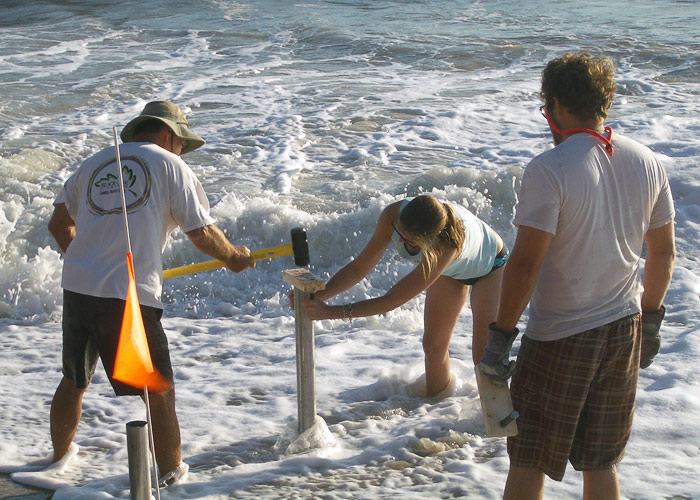
    The beach is a place for fun, sun and an escape from the real world for a short time. You would think that such a wonderful place to be would be free from worries, even of the microscopic kind. Water on beaches which is often monitored by scientists to keep from harmful contaminants such as human sewage from entering this water and making beach goers sick. However, new research shows that there is no monitoring system on the sand and more studies are coming back showing that there are harmful microbes contained within the sand. Things like pathogenic bacteria, fungi and viruses have been detected with the most recent tests. The scary part of it all is that scientists are unsure of exactly what effects will come from exposure to these different kinds of microbes since they had just found out these had even existed in the first place.
Details are plain as day in this article there is however, a lot of mystery surrounding just what could be living in the sand beneath our feet. Knowing more information on this subject would make for a lot better analysis. The question is how did all these microbes even get there? From years of tourists or just naturally? Also, why are they just discovering the existence of these little guys now? It's crazy to know they can even be in the sand we play in. We may be able to take vacations to the beach, so why can't microbes?
http://www.whoi.edu/cms/images/oceanus/becky-bab-levi_170653.jpeg

Wednesday, February 12, 2014

Microbes on Ice: Repairing DNA?

2/12/14

   Microbes are in every place in the world that you could imagine; From sulfuric puddles to the walls of caves. They get into almost every nook and cranny that we do. What about microbes that inhabit the ice? Scientists have new findings on what exactly a microbe can do while encased in ice, how about DNA repair while being stuck in it's frozen state? Scientists fed the microbes some food they essentially "reanimated" these microbes. Normally, these cells contained within the microbes break down after a certain period of time. Scientists say that there is some kind of metabolism going on within frozen cells to keep them at least a tiny bit alive for all this time. They found that the DNA repairs itself over time in these microbes, which means there could very well be microbes living on other planets if they can survive freezing for thousands upon thousands of years. The points are all labeled and clear about just how important this finding is for further research on life on other planets. Which begs the question, why haven't scientists studied ice microbes up until now? There's a whole new world found in this ice, and tons of "eureka" to boot. Ice is very simple to come across and is not too complex to study. Either way, these cool new microbes are going to take the scientific world by storm and could possibly solve our burning question of "can life be sustained on other freezing planets?"

Picture: http://www.uisoftware.com/Voyager/GuestPlanet/artmatica/IcePlanet.jpg

Wednesday, February 5, 2014

Dino DNA - Can we replicate these ancient beasts?

2/5/14

   In the mid 90's, the world was fascinated and awe stricken over the fantasy world of Jurassic Park. Two years after the movies release into theaters, scientists debunked myths surrounding dinosaurs and discovered new microbes that had to do with prehistoric worlds. Scientists said that you can't reanimate a T-Rex with just fossils alone, you would need far more than just a few bits of DNA found on these objects. However, they can reanimate things that were encased in sap, such as fungi, bacteria and other microbes. Things stuck inside sap remain perfectly in tact and are protected from all the elements. These microbes contained within the sap can be very valuable to future research. Certain bacteria and fungi that used to inhabit these insects, plants and soil can transform into a kind of "time capsule" so they can hide away until the living conditions for that species gets better. During this process they do not requite food or water but just simply stay in a catatonic state. For how long exactly? 650 million year old microbes have been found in sap. These bacteria and DNA fragments prove to be the scientific mother load for scientists hungry to find out more about dinosaurs and ancient life. This article is very straightforward in what it is saying to all of us. Since it is almost 20 years old I am positive more research has been done in that amount of time about certain DNA and microbes in prehistoric items. Certainly way more than we knew 20 years ago. This topic is always fascinating, because maybe someday we will have enough knowledge to finally replicate a dinosaur and be able to walk alongside them much like in Jurassic Park.

Picture: 
http://images.travelpod.com/tw_slides/ta00/9b3/afe/amber-with-ancient-lizard-caught-inside-boca-chica.jpg

Wednesday, January 29, 2014

Your Body is Mostly Microbes?

1/29/14


    2013 was quite the year in new microbial research. There was a treasure trove of information that scientists uncovered this past year, one of those things being that we as humans are basically made up of microbes. These little guys make up over 90% of our whole, the other 10% is devoted to human cells. These microbes often work symbiotically with their hosts in order to benefit both parties. Scientists also discovered that everyone is unique in what microbe mix they contain. There are many factors that make them different from each other such as diet and environmental variations. There is also research on why sick people, or those with weaker immune systems get sick so often. It's due to an increased level fungus/bacteria found on the skin. More studies showed that gut microbes can be directly linked to autism, mice with different mixes of gut microbes than that of regular mice showed signs of autism. All these discoveries and more are what 2013 had is store for scientists, and that is wonderful information. All these messages linked together perfectly and provided tons of new information for the masses to know about this research. It is also nice to know that we have mostly nice microbes that live on us rather than bad, I've always had the impression that most of them were bad little guys my entire life. Some questions that I had for the author were mostly that of "Did scientists find anything else out?" "Are there microbes we didn't even know existed that we are now finding under the microscope?" Only time will tell if we find out more information. Lets hope that 2014 brings a lot more new discoveries about the tiniest members of society.

Picture: http://www.microbiologyonline.org.uk/themed/sgm/img/modules-inline/3.3_disease.jpg


Friday, January 24, 2014

Benevolent Dog Dust - Can it support Infant Health?

  Some new research claims that "dog dust" or particles and microbes found on dogs after they have been outside, are starting to show benefits to babies in the household. Why? Simple, within this dog dust there are common allergens and particles that get into babies' immune systems and help out in later years when faced with allergens such as grass and dust mites through being exposed to them in previous situations. Studies have also shown that the dog dust helps bring in microbes that are commonly found in the gut of many mammals. This particular microbe is called the Lactobacillus Johnsoni, which protects against pneumonia in babies. This dust also helps in the long run because children who are exposed to "less than sanitary"
conditions such as day cares or farm life have a much better immune system growing up and are less susceptible to allergies and things like asthma later on in life.
      This author seems to be quite positive of the benefits this dust can have on infants in homes with dogs. Some points the author makes are that they are just now discovering this as we speak, so what if it has negative effects as well as positive ones? They claim that the chances of developing asthma and allergies later on in life is lessened due to the exposure to certain particles. What if it does not have anything to do with these particles at all? What if children just naturally develop these on their own? This new found discovery is supposed to be wonderful, but further research definitely should be done to back up the claim. I understand that being exposed to what is seen as "less than sanitary" conditions is supposed to boost up your immunity as a child and carries on into your adult life. After all, you are being exposed to millions of viruses and germs in those situations which makes it better for you in the long run when exposed to them again. I definitely think the author has a good point in this discovery. Especially throwing in legitimate names of microbes that help fight off certain illnesses such as pneumonia in babies. Also that when dogs bring the outside into a home that everything the dog was exposed to floats around in the air. Who knows what Fido could have drug in? Maybe it is quite beneficial to your household members. This is useful information to know when you begin to start new families. When your child asks "Mommy/Daddy can we get a dog, PLEASE?" Think of their health!
Lactobacillus Johnsoni

Credit: 

Article: http://ehis.ebscohost.com.libproxy.unm.edu/ehost/detail?vid=5&sid=9b1e681a-a0cf-4818-a6f7-f0466a140a57%40sessionmgr4001&hid=110&bdata=JnNpdGU9ZWhvc3QtbGl2ZSZzY29wZT1zaXRl#db=a9h&AN=93648353
Picture: http://news.ifr.ac.uk/2013/03/poultry-probiotic/

Thursday, January 23, 2014

chicken nuggets

This course is split up into two different subjects that merge together into one whole. These subjects are microbial ecology, the study of microbes in their habitats, and English the study of our own language. I chose this course because I was interested in how those two subjects could be brought together in harmony. It also seemed really interesting to me.
'
http://www.illustrationsof.com/royalty-free-rf-microbe-clipart-illustration-by-lineartestpilot-stock-sample-1185189.jpg